Privacy regulations are multiplying faster than most teams can track. Every year, Data subject request (DSR) volume increases. Privacy teams, somehow, are not growing at the same rate. At some point, a spreadsheet and a shared inbox stop being a fulfillment workflow and start being a liability. That point, for most teams, is now.
DSR automation software, also called DSR fulfillment software, handles the operational steps of the DSR lifecycle, from intake and identity verification to data discovery, action execution, and audit logging, without requiring manual intervention at each stage.
This guide is for privacy professionals and compliance managers who are ready to move beyond manual data subject request management. We’ll cover what DSR automation actually looks like in practice and how to get started.
What is a data subject request?
A data subject request is a formal request from an individual to exercise their privacy rights over personal data your organization holds, covering deletion, access, correction, portability, and opt-out requests.
You may also hear the terms data subject access request (DSAR) or DSAR automation software. These terms refer specifically to requests for access to information with no further action taken, but are sometimes used interchangeably with DSR and DSR automation software. In fact, the overwhelming majority of requests are deletion requests, though request type volume can vary significantly by industry.
Which regulations require DSR fulfillment?
If your organization collects or processes personal data, the odds are good that at least one privacy law requires you to fulfill data subject requests within a defined window. Over 50% of the U.S. population is now covered by a comprehensive state privacy law, with 24 more states expected to pass legislation within the next five years.
Managing unique compliance requirements across a growing patchwork of regulations is exactly where manual workflows break down, and where automation becomes a business necessity rather than a nice-to-have.
In the U.S., there is no federal comprehensive privacy law, but 20+ states have created their own laws with varying data subject rights and request fulfillment requirements.
Major global privacy regulations requiring DSR fulfillment include GDPR (EU and UK), LGPD, (Brazil), PIPEDA (Canada), PIPL (China), POPIA (South Africa), PDPA (Thailand), DPDP (India), APPI (Japan) and the Australian Privacy Act. Each law takes a unique approach to available data subject rights, response deadlines, and other nuances of request processing.
What your DSR automation needs to address
Your manual DSR process probably looked something like this:
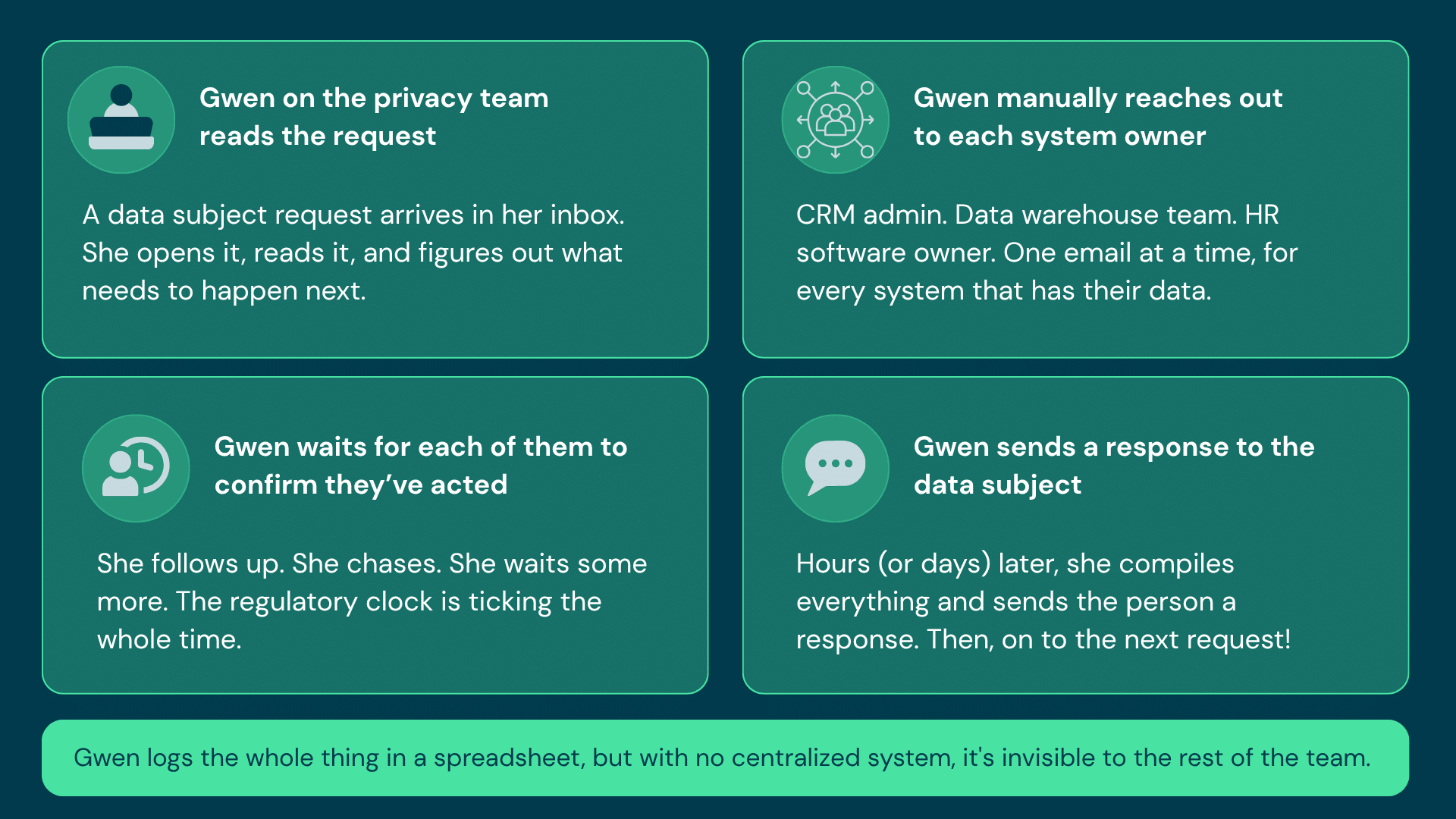
This is tolerable when you’re only receiving a handful of requests per month. If you’re automating DSRs, you need to address 3 goals:
- What is your single biggest pain point in your current DSR process? High volume, missed deadlines, manual system coordination, no audit trail. The answer shapes which workflow to build first. Start there, not with every possible scenario.
- Do you know where personal data lives across your systems? Automation is only as good as its discovery coverage. If you don’t have a clear, continuously updated picture of where personal data sits across your stack, that’s where to start. A live data map is the foundation everything else runs on.
- What does “done” look like for a fulfilled request, and who owns each step today? Before you configure automation, you need to understand what you’re automating. Map the current process, identify the manual steps that consume the most time, and design your automation around eliminating those first.
Common DSR automation patterns and when to use them
One of the most useful things you can do before configuring any automation is to think about what you actually want the system to do, not just how to turn a feature on. Consider these examples of popular automation strategies from real DataGrail users. The most powerful workflow automations combine several of these ideas into their automation strategy. Each example details instructions for setting up the automation on your own, but remember that you can also simply ask Vera, DataGrail’s AI privacy agent, for help bringing any DSR automation idea to life.
Zero-click workflows
This is the most common starting point. If you fully automate DSR management, once a request has been verified and all connected systems have run their queries, the platform automatically closes the request and sends the response. No one needs to log in and click a button.
This matters most in two scenarios: high-volume environments where manual processing is simply not feasible, and lower-volume teams that have reviewed and trust their integration outputs and want to reduce the number of routine tasks on their plate. For teams that are new to automation, setting up zero-click fulfillment for a single, well-understood request type is often the fastest path to a meaningful win.
For DataGrail customers: Your automation will kick off request verification automatically, move the request through all connected systems, and either compile the access package or execute deletions once all systems have responded, then send an automated message to the requester. No manual touch required.
Relationship-type routing
Process requests faster and more accurately by configuring your automation to route requests based on the type of person making them (e.g. customer, employee, job applicant). Each request only queries the systems that actually hold that person’s data.
Configuring workflows to route requests based on data subject relationship type (consumer, employee, job applicant, etc.) prevents your integrations from running unnecessary queries and keeps fulfillment clean and accurate. If you have multiple direct-contact integrations and clear logical separation between who lives in which systems, relationship-type routing should be one of your first builds.
For DataGrail customers: Add a Condition to your “Extracting Personal Data” workflow using the data subject relationship field. If the nuances of the relationship might not be apparent to requesters, you can also add conditions based on which systems successfully find the requester’s data. Create as many paths as you need based on your data map. Add Actions to each branching path of your workflow to process only the relevant subsequent integrations and skip the rest.
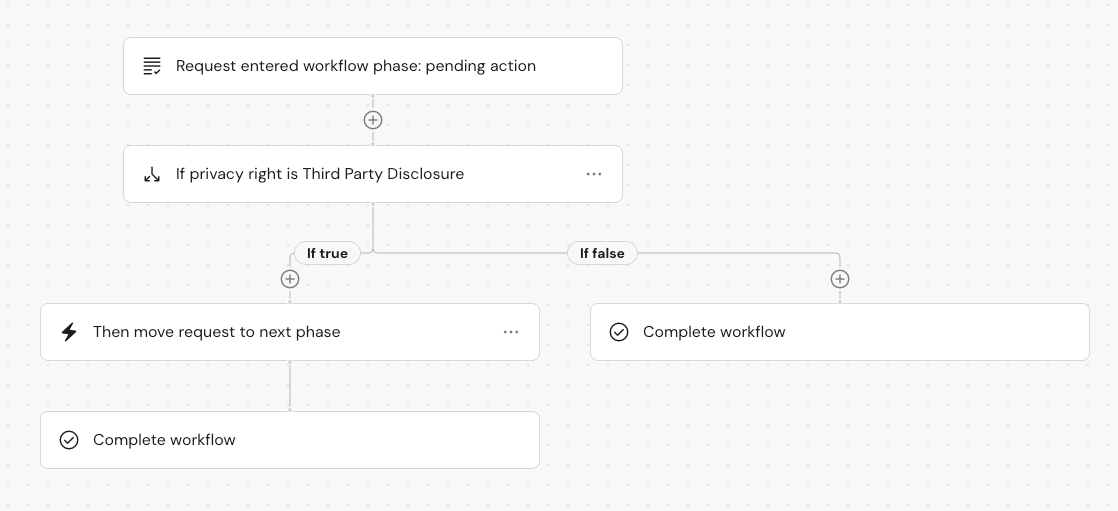
Third-party disclosure automation
Some privacy laws provide consumers the right to request information about the third parties with whom you have shared their data. In some cases, you may prefer to customize your response depending on the identity of the requester, but if you have template language you’d use for every request, you can simply automate your reply to these requests.
For DataGrail customers: You configure your disclosure language once inside DataGrail, map it to the relevant request types, and set up your automation workflows. From there, the platform handles execution. For most teams, initial setup takes an afternoon. Once it’s running, it runs.
Human-in-the-loop workflows
Even when you want an escalation path in your DSR strategy, you can still automate the rest. Build a task assignment into your automation strategy.
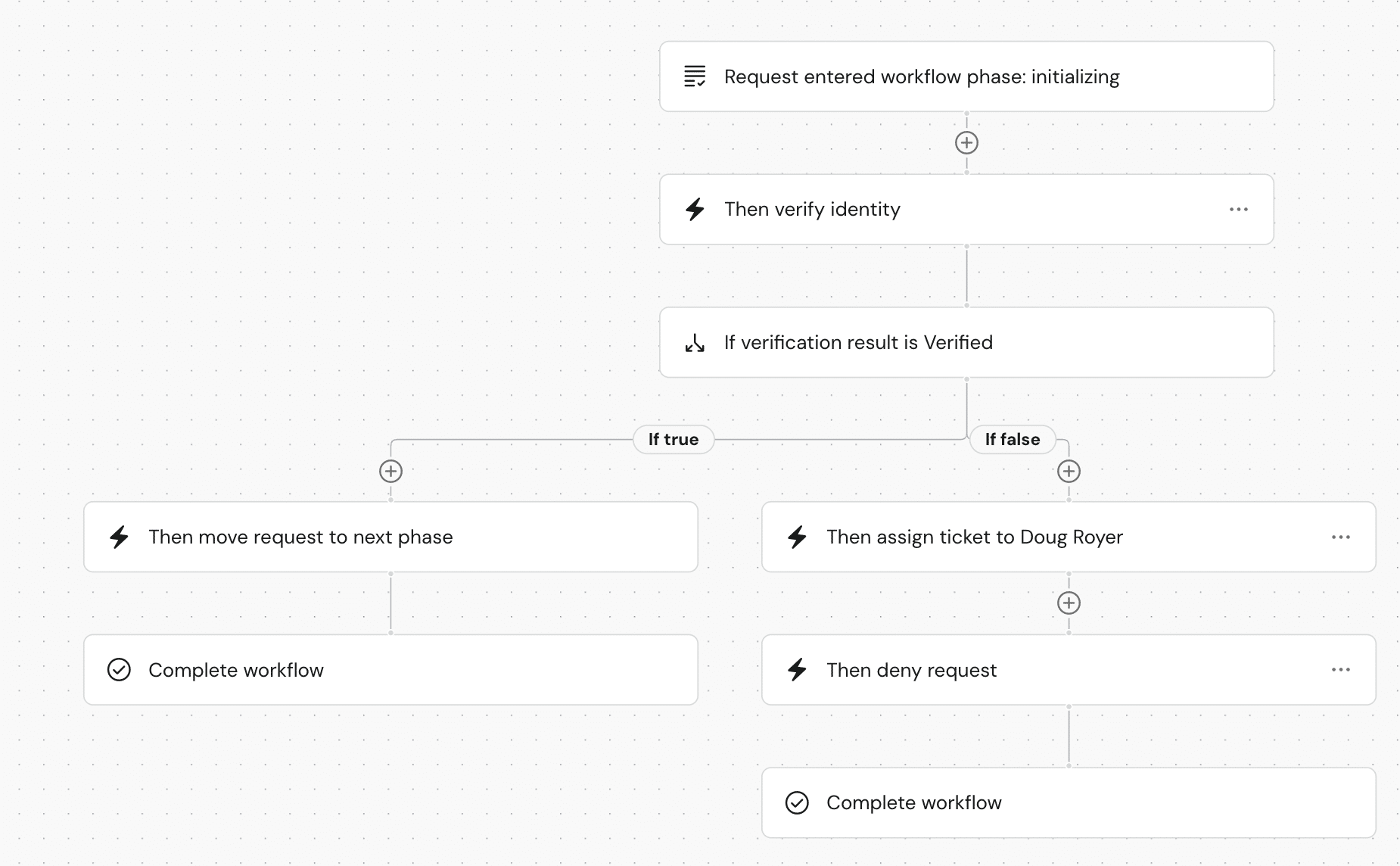
This is useful for cases where one step in the process can’t yet be fully automated due to system limitations, complex data-sharing relationships, or legal requirements. For example:
- Highly regulated industries
- Organizations with complex vendor or partner relationships
- Anywhere you prefer to add a personal touch to higher stakes requests
For DataGrail customers: Within your workflow configuration, you can insert a task step that pauses the request and notifies the right person to take action. This can be either at the start of a stage or after a conditional check, like confirming whether the requester’s data is in a specific system. The assignee receives the assignment, completes their part, and marks it done. The automation continues from there. It feels less like a workaround and more like a sensible checkpoint, one that keeps requests moving without sacrificing oversight.
Everything else
You can account for other unique automation strategies using a dedicated request intake form. Collect any information you need to automate more intelligently at the point of intake, and use responses to create branching paths.
If your privacy team has repeatable playbooks for certain types of requests, they can most likely be automated this way. Consider if your company responds to requests differently depending whether:
- Legal Relationship is Controller or Processor
- The request to pertains to a specific sub-brand or subsidiary
- The data subject purchased a specific product
For DataGrail customers: You add custom questions directly to your intake form, then use those questions as Conditions in Automations to determine how answers will change request handling.
How to measure DSR automation ROI
Is your automation working for you? Set a north star and track these three metrics:
-
- Time per request. How long does fulfillment actually take, end to end, including coordination, system queries, and response delivery?
- Cost per request. Multiply your per-request time by the loaded cost of everyone involved, including any engineering support.
- SLA compliance rate. How often are deadlines being met? Missed response windows are a compliance risk in themselves, and in jurisdictions with mandatory audit requirements, they carry direct consequences.
- Request depth. How many systems do requests have to navigate, and how confident are you that your deletions are truly comprehensive? Leaving data behind isn’t just an immediate compliance gap, it also leaves your mistake exposed in the event of later data breaches.
At the volume most teams are now handling, manual fulfillment isn’t just inefficient. It’s a liability. Make sure your executive team understands each metric and how your automations impact it.
What to look for in DSR automation software
If you’re not already a DataGrail customer, but you still want to automate your DSRs, keep these capabilities in mind when evaluating DSR automation software:
-
- Integration depth: Your fulfillment is only as complete as the systems your platform can reach. Look for a solution with a large, in-house integration network that covers the SaaS tools, databases, and third-party services your organization actually uses. Solutions that rely on custom engineering for each integration will become bottlenecks as your stack changes.
- End-to-end automation: Some tools handle intake but drop the request in your lap the moment verification or data discovery begins. Look for a platform that automates the full lifecycle: intake, identity verification, cross-system data discovery, action execution, response delivery, and audit logging, with no manual handoffs required between stages.
- Identity verification: Verification should be handled automatically, proportionately, and without creating unnecessary friction for legitimate requestors. Weak verification creates fraud risk; overly burdensome verification creates compliance risk of a different kind.
- Audit trail and SLA reporting: You need to be able to demonstrate compliance history and track response time performance. When a regulator asks for documentation, your platform should make that straightforward. Every request needs to show evidence that the automation didn’t just exist in theory, but actually operated in process.
- Automation partnership: Taking automation from an idea to reality requires a deep understanding of your tech stack and how your data actually flows from one system to the next. Your tech partner shouldn’t leave you to figure it out on your own. Look for a partner that helps you build.
How DataGrail can help
DSR volume isn’t slowing down. The teams that will handle it well are the ones building the infrastructure now, while they still have the capacity to do it thoughtfully.
DataGrail Request Manager automates DSR fulfillment end-to-end, from intake to audit trail, across 2,500+ integrations. Vera, DataGrail’s complete AI privacy agent, can build automations with you using context from your actual data map and current privacy regulations. You can set up automations on your own, ask an account manager for help, or just let Vera build and test automations that meet your goals. The choice is always yours.
If you’re a DataGrail customer, also explore our complete guide to optimizing your DSR management strategy. If you’re not a customer yet, talk to an expert to get started.