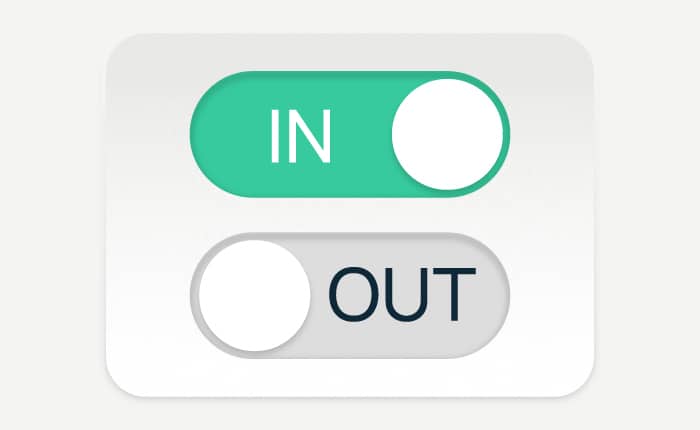
Opt-in consent and opt-out consent are the two models that govern how businesses collect, use, and share personal data. Every privacy framework in the world is built on one of these defaults, and most modern programs need to operate under both simultaneously. Understanding the distinction is not just definitional. It determines your technical architecture, your default processing behavior, and the workflows your consent management platform needs to support.
What Opt-In Consent Means
Under an opt-in model, no processing happens until the individual says yes. Consent must come before data collection begins, and it must be freely given, specific, informed, and unambiguous, expressed through a clear affirmative act. A pre-checked box, continued browsing, or acceptance of bundled terms of service does not qualify. The standard is consistent across virtually every framework that uses opt-in: the person must understand what they are agreeing to and actively choose to proceed.
Opt-in applies globally to specific categories of processing regardless of where you operate. Sensitive personal data (health, biometrics, precise location, ethnic origin) almost universally requires affirmative consent. So does collecting data from children, re-engaging a consumer who previously opted out, and processing data for a new purpose unrelated to the original collection. Common real-world examples include a delivery app requesting access to your precise location, a cookie banner presenting accept and reject options with equal prominence, or a newsletter signup form with an unticked checkbox.
What Opt-Out Consent Means
Under an opt-out model, processing is permitted by default until the individual objects. The business provides notice of its data practices and gives consumers a mechanism to say no, but silence is treated as permission to proceed. This is the default for routine data collection, sale, and targeted advertising in most US state frameworks and several other jurisdictions globally.
The most significant development in opt-out is the rise of universal opt-out mechanisms (UOOMs). Rather than requiring consumers to visit each website individually, a UOOM like Global Privacy Control sends a signal on the user’s behalf from the consumer’s browser to every site they visit, communicating their opt-out preference at scale. A growing number of frameworks now require businesses to detect and honor these signals. When you receive one, the obligation is specific: stop selling that user’s data and stop sharing it for targeted advertising. DataGrail’s Do Not Sell or Share solution automates this enforcement across your data ecosystem so a single signal triggers the required action everywhere it needs to reach.
The table below maps the key operational differences. The sections that follow unpack each row in more detail.
| Opt-In | Opt-Out | |
| Default (no signal) | Cannot process | Can process |
| Proof burden | You document they said yes | They signal stop; you comply |
| Verification | Consent record required | No identity verification needed |
| What expires | Consent (purpose change, policy change, time) | Opt-out holds until consumer re-engages |
| Re-engagement | Fresh consent required | Waiting period before you can ask again |
| Withdrawal | Must be as easy as granting | N/A (consumer simply re-opts in) |
| Signal mechanism | Affirmative act (click, check, sign) | UOOM, Do Not Sell link, direct request |
The Default State: What Happens When You Have No Signal
The operational difference between opt-in and opt-out comes down to one question: what is your default when you have no signal from a user? Under opt-in, silence means you cannot process. Under opt-out, silence means you can. This is the single most important distinction for engineering and product teams to internalize, because it determines how your systems behave before any user interaction occurs.
When a new visitor lands on your site and you have no prior consent record and no opt-out signal, your system needs to make an immediate decision. In opt-in jurisdictions, the answer is clear: do not process until you receive affirmative consent. In opt-out jurisdictions, you can proceed with disclosed processing activities while making the opt-out mechanism available. But if your user base spans both models simultaneously, which most global businesses face, your consent management platform needs to resolve that default correctly for every visitor based on context, not apply a single global rule.
The Consent Lifecycle: What Happens After the Click
Most content about opt-in vs opt-out treats consent as a point-in-time event: a user clicks accept or reject, and the story ends. In practice, consent has a lifecycle that your program needs to manage continuously.
A “yes” does not last forever. Consent can expire, become invalid when you change your processing purpose, or need renewal when your privacy practices materially change. A “no” also has a lifecycle: some frameworks impose a waiting period (12 months in California’s case) before you can ask a consumer who opted out to reconsider, and when you do, the re-engagement itself requires fresh opt-in consent. Withdrawal has to be as easy as granting: if a user consented with one click, revoking that consent cannot require three.
Your consent management infrastructure needs to track not just the current state (yes or no) but the history: when consent was given, for which specific purposes, under which version of your privacy notice, and when it was withdrawn or expired. This audit trail is what regulators ask for during an investigation, and it is what distinguishes a defensible program from a checkbox exercise.
Consent Quality vs. Consent Quantity
Not every processing activity needs the same level of consent, and asking for permission where it is not required creates its own problems. Over-consenting, asking users to opt in for activities that operate perfectly well under an opt-out model or under a different lawful basis entirely, degrades user experience, increases consent fatigue, and dilutes the consents that actually matter. When everything looks like a consent request, users stop reading them.
Under-consenting is the opposite risk: processing sensitive data or engaging in high-risk activities without the affirmative consent they require. The judgment call of “does this activity actually need opt-in consent, or am I being overly cautious” is a daily practitioner question. Getting it right requires understanding which activities fall into which model, and having a system that enforces the distinction automatically rather than relying on manual decisions at the point of collection.
What Your Program Needs to Handle
Your privacy compliance program needs infrastructure that handles both models natively. That means two different workflows: one for activities that require affirmative consent before processing begins, and one for activities where you can process until someone objects. It also means two different verification standards. Opt-in requires documented proof of consent. Opt-out requests generally do not require identity verification, and over-verifying them is itself a compliance violation.
DataGrail connects both sides: Consent Management for opt-in intake and signal detection and Request Manager for automating opt-out requests across 2,400+ integrations. One platform that distinguishes between “this user hasn’t said yes yet” and “this user said stop,” and handles each correctly. Request a demo to see how it works.