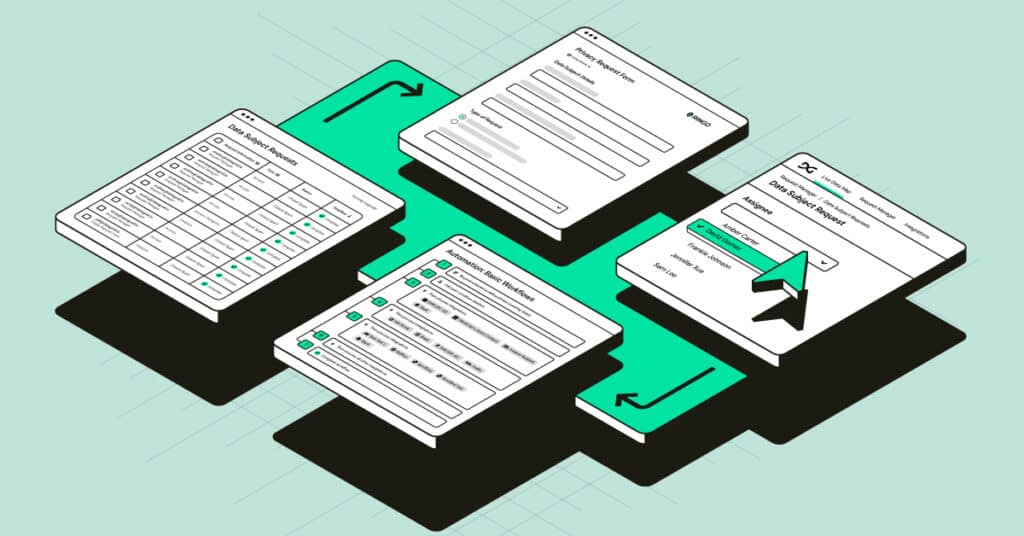
Managing Data Subject Requests (DSRs) effectively is more than just a compliance checkbox, it’s a cornerstone of a customer-first privacy practice. As businesses create increasingly sophisticated data use cases and rapidly adopt AI-powered tools, truly compliant data subject request management requires deep understanding of your data inventory, meaningful collaboration across internal stakeholders, upkeep with increasingly unique state privacy laws, and a commitment to an exceptional customer experience. It’s crucial for organizations to streamline their DSR process in order to reduce risk, ensure compliance, and build trust.
Privacy-first brands like Drata and GoFundMe use DSR management as a starting place to develop a culture of strong privacy practice. They understand that an outdated and manual DSR process creates distrust with consumers, increases legal and regulatory risk, and disrupts internal operations by demanding excessive amounts of time from cross-functional teams just to maintain bare minimum compliance, if that.
By mastering your DSR process, you can build trust with internal collaborators instead. Make DSR compliance simple, modern, and efficient, and you’ll find teams more collaborative on other privacy projects as well.
Let’s get into it.
5 Essential Practices For a DSR Compliance Tool
These five fundamental automation strategies will underpin the lifecycle of a DSR, creating a compliant and delightful privacy experience.
1. Filter out spam from your privacy requests
Spam accounts and bad actors can slow down your privacy request process with unnecessary and misleading requests. Depending on your privacy compliance software, you may be able to automatically filter these requests out of your workload.
One way to minimize these requests is to require email verification. For DataGrail customers, you can also enable DataGrail Subject Verification to automatically apply existing data for identity verification. This step is crucial for reducing the need for additional PII collection and time spent manually verifying requesters.
Keep in mind that some privacy laws require minimal friction on privacy opt-out requests. In some cases, verification may be considered an excessive obstruction to request fulfillment. You may choose to bypass verification for opt-out requests in these regions. DataGrail’s Do Not Sell or Share solution can help enforce opt-out requirements across your entire data ecosystem.
2. Optimize Automation Based on Policy and Region
As privacy laws become more intricate, automation plays a critical role in managing compliance. Privacy professionals should choose solutions that can automate responses based on policy and region, and look for features that adapt to geographic regulations and automate compliance tasks.
DataGrail automatically prefills a data subject’s location based on their IP address, and they can adjust it as needed. From there, the location is used to dynamically update request type options and apply the correct policy. This ensures that you remain compliant with the latest regulations without manual adjustments.
This is especially important as new regulatory layers come online. With over a third of U.S. states covered by unique and occasionally conflicting privacy laws, there is no “one-size-fits-all” approach to DSAR management. For example, states deviate on whether access requests need to output all of a consumer’s data, all of a consumer’s non-sensitive data, the categories of third-parties who may have access to the consumer’s data, or some combination of these ideas. DataGrail’s optional automated policy updates and policy library can keep your platform aligned with best practices for each new privacy law.
3. Leverage Integrations for Assured Compliance
Effective DSR management requires seamless integration between your DSR processor and other tools you use. This approach completely eliminates risk of human error such as accidental omissions.
We recommend opting for a DSR management software that offers robust integrations that fit with your existing systems in order to ensure efficient request handling. Use Live Data Map to discover and index where personal data lives across your tech stack and then connect those systems to Request Manager. DataGrail’s 2,400+ integrations can accurately and immediately access, update, or delete data from third-party systems with no human intervention required at all. You can also choose to include a human review before the automations’ final actions are completed, if desired.
4. Automate Internal Database Deletion and Modification
Proprietary data sources are often some of the most complex to navigate for a privacy request. The most sensitive personal information is usually found in these systems, and their unique configurations can sometimes make request fulfillment more complex. By leveraging tools like DataGrail’s Request Manager, you can automate the deletion, modification, and return of data from internal systems in accordance with privacy regulations and your business practices.
Whether it’s your HRIS, internal databases, or proprietary platforms, your DSR tool should be able to connect to those systems directly and execute access, deletion, or modification requests without manual intervention.
5. Utilize Automated Workflows
As data pipeline and tech stack complexity increase, so does the complexity of processing a privacy request. Manually orchestrating a privacy request through the right people and right software can become extremely unscalable, time-consuming, and open to human error. That’s why you should ensure your data privacy compliance tool can determine how certain requests should be handled automatically.
DataGrail customers use Automations to create fully automated, dynamic privacy workflows that expedite request processing by intelligently targeting only relevant systems and skipping unnecessary steps. Some of the most common use cases for this functionality include:
- Distinctly handle employee and customer records, and queue only access, deletions, or modifications relevant to that record type (watch the video here!)
- Specify the order in which data is deleted, ensuring that data isn’t accidentally repopulated by another integration further down the queue
- Smart-deny requests based on location, removing the need to manually review requests from data subjects that do not fall under a legal regulation
- Skip systems required to retain data, for example allowing some systems to return data on access requests, but not delete if the data is required for another reason, such as SEC compliance
Taking a little time to set up workflow logic proactively ensures that all future requests are handled efficiently in a predictable pattern that ensures compliance.
Some privacy laws require a human touch to stay compliant, for example by requiring certain data is redacted from an Access request. Use Workflows to route and assign these requests when necessary, while allowing automations to handle the vast majority of straightforward requests. That way, you can focus your manual resources only where they can be most intelligently applied.
How These Practices Lead to Strategic Advantages
Enhance your security and compliance.
Automation not only optimizes resources, but also bolsters security and compliance. Automated systems are configured to follow precise legal protocols and give you complete confidence in your data privacy program. With privacy litigation on the rise, your brand cannot afford to leave compliance up to overburdened employees working with spreadsheets and notes docs.
As regulations become more complex and the volume of DSRs increases, automating your DSR processes is not just a matter of efficiency—it’s a crucial step towards strengthening your privacy posture and ensuring compliance with data protection laws. As you look to improve your DSR process, focus on automation capabilities that can manage the volume and complexity of your requests in a way that’s both functional and productive.
When exploring options, you might find that platforms offering all of the aforementioned features can support your privacy efforts in a more comprehensive way. For those already using privacy solutions, be sure to check which of these features are and aren’t in place so that you can keep your data management practices as efficient and compliant as possible.
Save more time for strategic work.
Considering all of the features and strategies we’ve outlined above, automated DSR fulfillment isn’t just a convenience, it’s a game-changer for privacy teams. By automating routine DSR tasks, businesses can free up their teams to focus on more strategic initiatives.
Grow cross-functional partnerships.
Making DSR compliance burdensome and complicated not only reduces the likelihood your team will be effective at DSR compliance, it also impacts cross-team cooperation on all other privacy initiatives. DSRs can impact almost every team at your organization.
When they trust that their privacy leader shares their best interests at heart and roots for their success, marketing teams will be more receptive to collaborating on consent management, product teams receptive to contributing to AI governance, and IT teams receptive to detailed risk assessment protocols. Lead with empathy, reduce extraneous work, and not only will your DSR process be more compliant, but all other privacy efforts will be as well.
Ready to transform your DSR process and stay ahead of the curve? Dive into the world of automation and discover how the right tools can propel your organization toward a more secure and compliant future.
At DataGrail, we make DSR management work for you—from request intake and fulfillment to data discovery, consent, and risk assessments, all powered by one connected platform. Get started here.