Why Privacy Teams Leave OneTrust for DataGrail: Discussions on DSAR Automation, Data Discovery, and Consent Management
Why Privacy Teams Leave OneTrust for DataGrail: Discussions on DSAR Automation, Data Discovery, and Consent Management
It can be intimidating to make a change to your privacy management platform. Migration takes time, focus, and executive buy-in. But the verdict is in: reducing risk, simplifying operations, and regaining confidence in your privacy program is worth it.
DataGrail has worked with hundreds of organizations that made the decision to migrate off OneTrust. While every organization is different, the reasons behind the switch are remarkably consistent.
Read on to explore what real privacy teams are saying about OneTrust, why they left, and what they’ve gained with DataGrail.
OneTrust requires manual work where DataGrail offers automation
Privacy risk increases when teams rely on spreadsheets, email, and human coordination to manage regulated processes. As regulatory scope expands and operational volume increases, manual workflows don’t just slow teams down—they introduce risk.
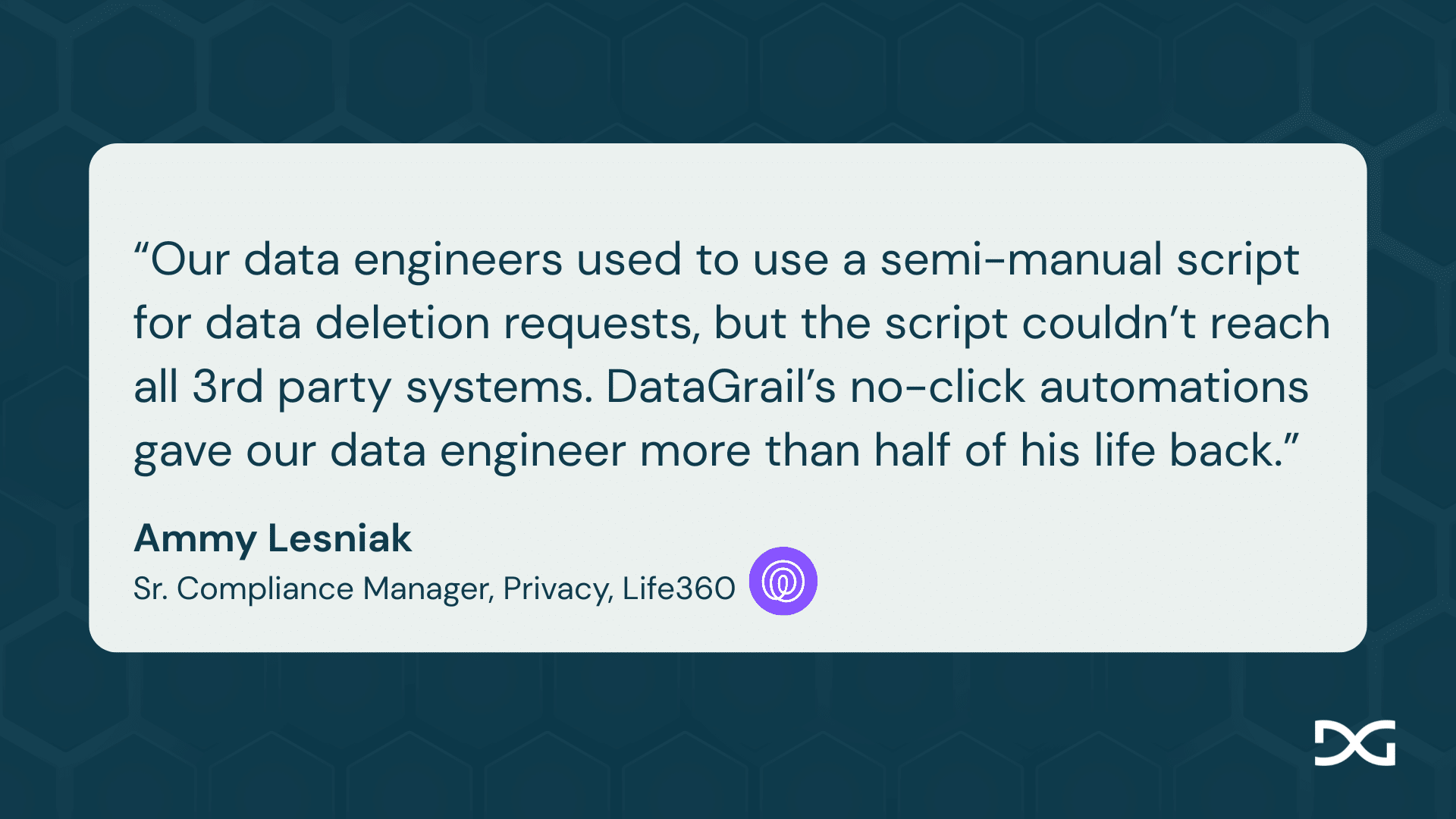
Many teams that move off OneTrust point out how much privacy work still happens outside the platform. While some functionality exists, teams are left stitching together manual steps for request intake, system notifications, fulfillment tracking, consent upkeep, and ongoing data mapping. As complexity grows, these gaps compound.
DataGrail eliminates fragmented privacy work with end-to-end automation across the entire privacy lifecycle. Requests are automatically routed and fulfilled, data systems and vendors are continuously discovered and mapped, and consent stays up to date without manual work. With always-on workflows and 2,400+ integrations, privacy programs can scale efficiently without adding headcount or risk.
For former OneTrust customer Dexcom, manual request handling was consuming valuable internal resources and slowing response times. After moving to DataGrail automation fundamentally changed their privacy operations:
Read the full case study here.
Modern privacy programs require more than point automation. They demand a unified, AI-powered platform that continuously manages requests, consent, data mapping, and risk—so teams can scale confidently as regulations and business complexity evolve.
Limited visibility into where data actually lives
Accurate data discovery is foundational to privacy compliance. Without a clear, continuously updated view of systems processing personal data, teams struggle to respond confidently to regulators, auditors, and consumers.
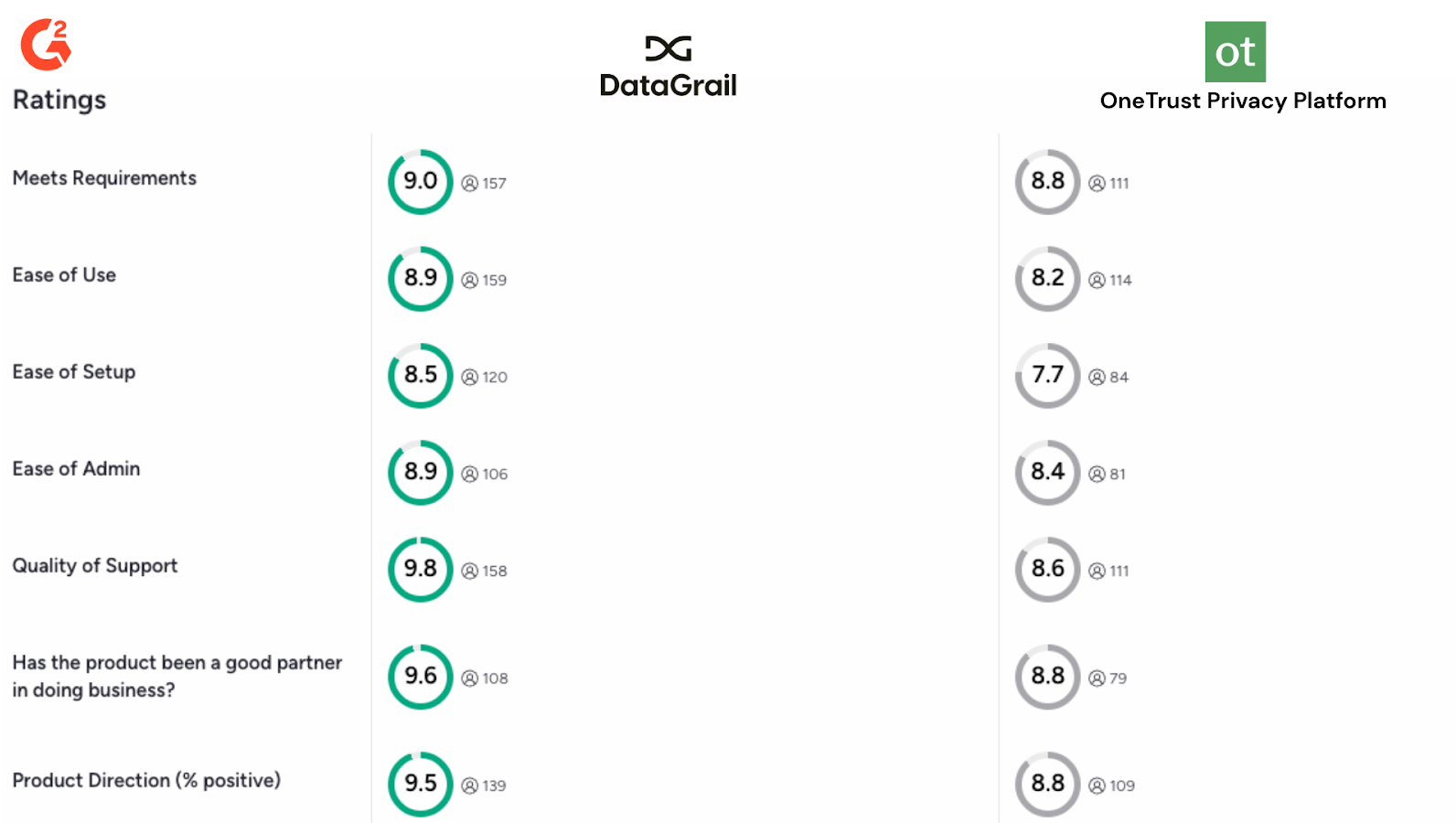
Real user review data on G2 shows that DataGrail consistently earns higher customer satisfaction scores than OneTrust across core privacy management categories, including Sensitive Data Discovery — the very capability teams rely on to understand where personal data actually resides and flows. In comparison metrics, DataGrail reviewers rate Sensitive Data Discovery and related features significantly higher than OneTrust reviewers, reflecting stronger perceived visibility into data environments.
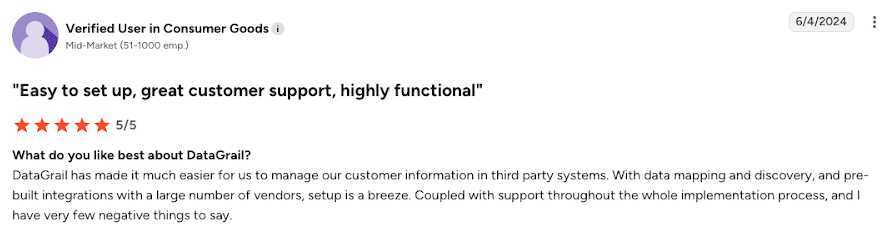
Without reliable discovery and monitoring, privacy teams are forced to rely on assumptions rather than evidence which increases risk and slows responses to regulatory inquiries, audits, and consumer requests.
Complexity creates operational risk
As privacy obligations expand, teams need systems that make compliance easier to manage—not harder to understand. Yet many privacy leaders describe OneTrust as a patchwork of modules that don’t work together cleanly, forcing teams to navigate complexity instead of reducing it.
By contrast, teams that adopt a unified privacy platform report clearer workflows, connected reporting, and fewer manual checks. As Claudia Castro explains after implementing DataGrail across DSARs and data mapping:
Read the full case study here.
Privacy leaders frequently describe difficulty connecting workflows across consent, data mapping, and DSAR management. Reporting becomes fragmented, and teams are forced to rely on manual checks to fill in gaps.
When compliance depends on stitched-together workflows, the margin for error grows.
Support that feels reactive, not strategic
Privacy programs are not static. Regulations evolve, enforcement increases, and internal data ecosystems change constantly. Teams need a partner who understands privacy, not just a ticketing system.
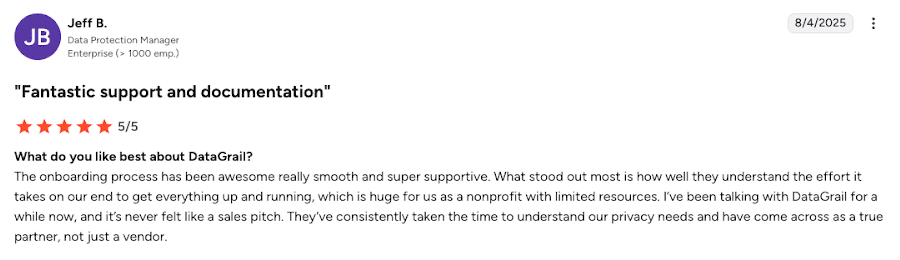
A recurring theme among teams leaving OneTrust is frustration with implementation and ongoing support. Many describe needing external consultants or internal specialists just to operate the platform effectively.
By contrast, teams moving to DataGrail consistently cite hands-on onboarding and ongoing guidance from dedicated privacy experts who act as an extension of the team.
High total cost with unclear return
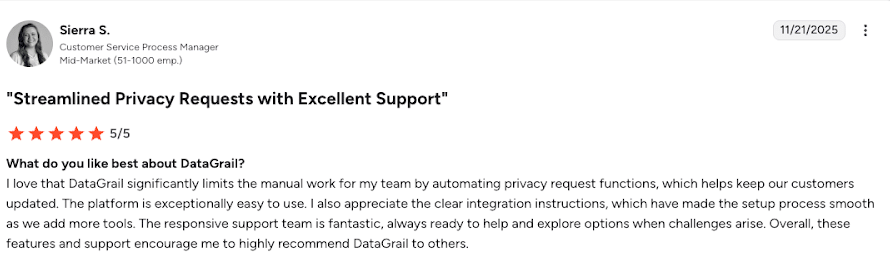
Multiple OneTrust customers have recently reported unexpected 3 to 10x price increases at renewal. Beyond licensing fees, many privacy teams discover that the true cost of OneTrust extends far beyond the contract. Paid support hours, third-party consultants, and ongoing internal engineering time quickly add up, especially as programs grow more complex. What initially appears to be an all-in-one platform often requires significant additional investment just to configure, maintain, and operate effectively.
As one team noted, “OneTrust charged us $500/hr for support and we had to code our own intake form. DataGrail onboarding and ongoing customer service has been very different.”
The challenge is not just cost, but predictability. When support, consulting, and internal resourcing are required to keep the system running, it becomes difficult for privacy leaders to forecast budget or clearly demonstrate return on investment.
What teams are looking for instead
Teams leaving OneTrust are not just switching tools. They are changing how they approach privacy.
Across migrations, teams consistently prioritize:
- Complete, automated privacy workflows
- Accurate, continuously updated data mapping
- Clear visibility into privacy risk
- Scalable DSAR and consent management
- A true partnership with privacy experts
This aligns with DataGrail’s position as a complete, AI-powered privacy automation platform designed to eliminate privacy risk, not just document it.
Considering a move from OneTrust?
If your team is spending more time managing tools than managing privacy risk, it may be time to reassess.
You can explore a detailed comparison of DataGrail vs OneTrust, or learn more about our OneTrust migration offer designed to make switching straightforward and low risk.
Privacy should give your organization confidence. Your platform should help you earn it.