
February was a big month for agentic privacy AI, security, and customer autonomy. We shipped a general availability release of Vera, DataGrail’s AI privacy assistant, alongside a brand-new global search experience, and a wave of self-service improvements that give teams more control without adding complexity.
Here’s what’s new.
Vera AI Agent is Generally Available
Vera, the complete AI privacy agent, is now generally available for all customers. Vera is fully integrated into the DataGrail platform, delivering context-aware guidance, insights, and human-governed actions right in your DataGrail workflows.
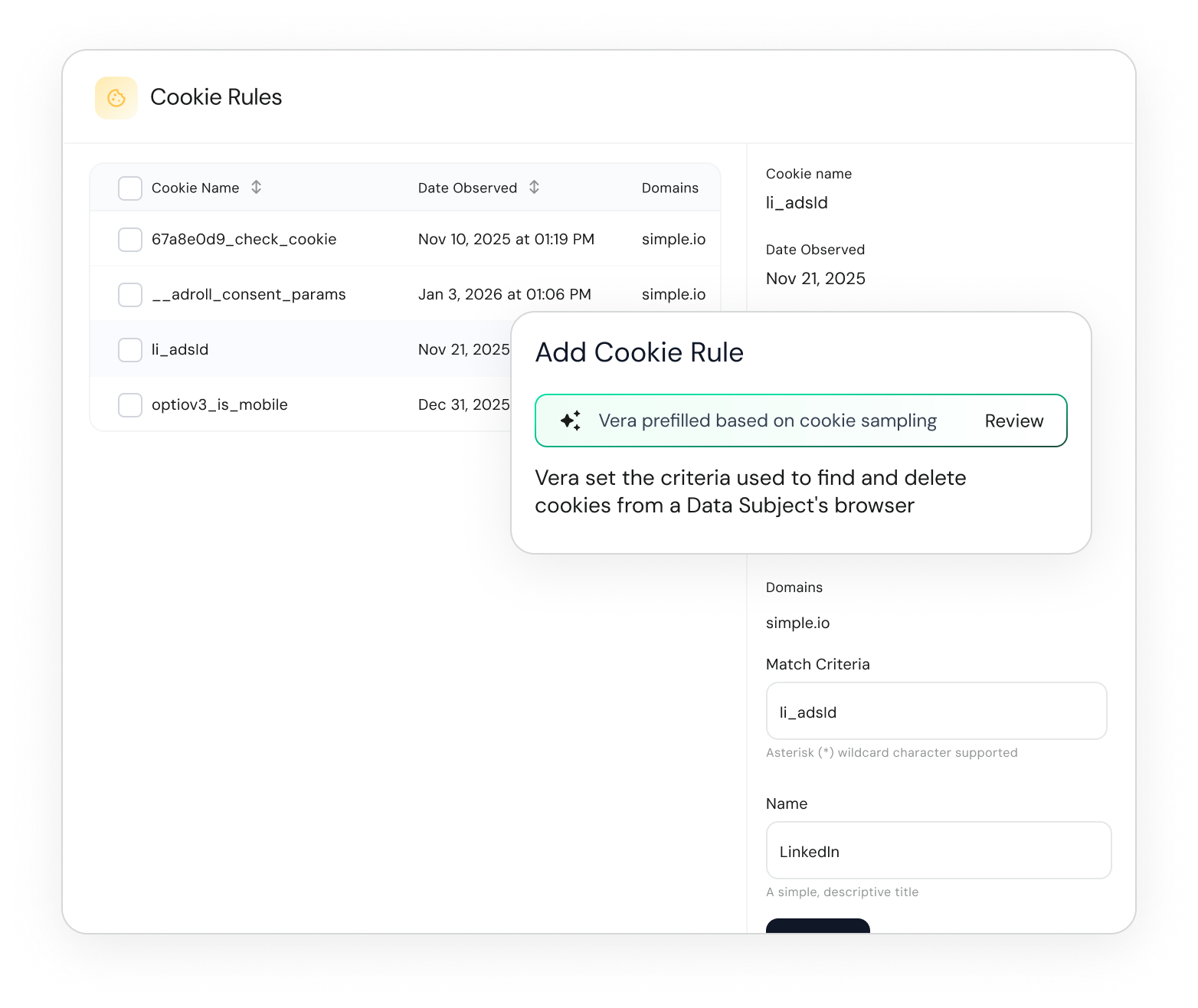 Unlike homegrown agents or bolted-on AI chatbots, Vera is:
- Fully integrated across your DataGrail workflows—no prompt engineering required
- Context-aware, with a full understanding of your privacy operation
- Human-governed, adopting user permissions and never acting without approval
- Secure to the core, with single-tenant isolation and zero training on your data
The Vera team also shipped several improvements post launch, including: a bigger chat window, product feedback integration, UI improvements, and changelog knowledge. To learn more, read the docs.
The DataGrail MCP Server
We launched the first production-ready privacy MCP server.
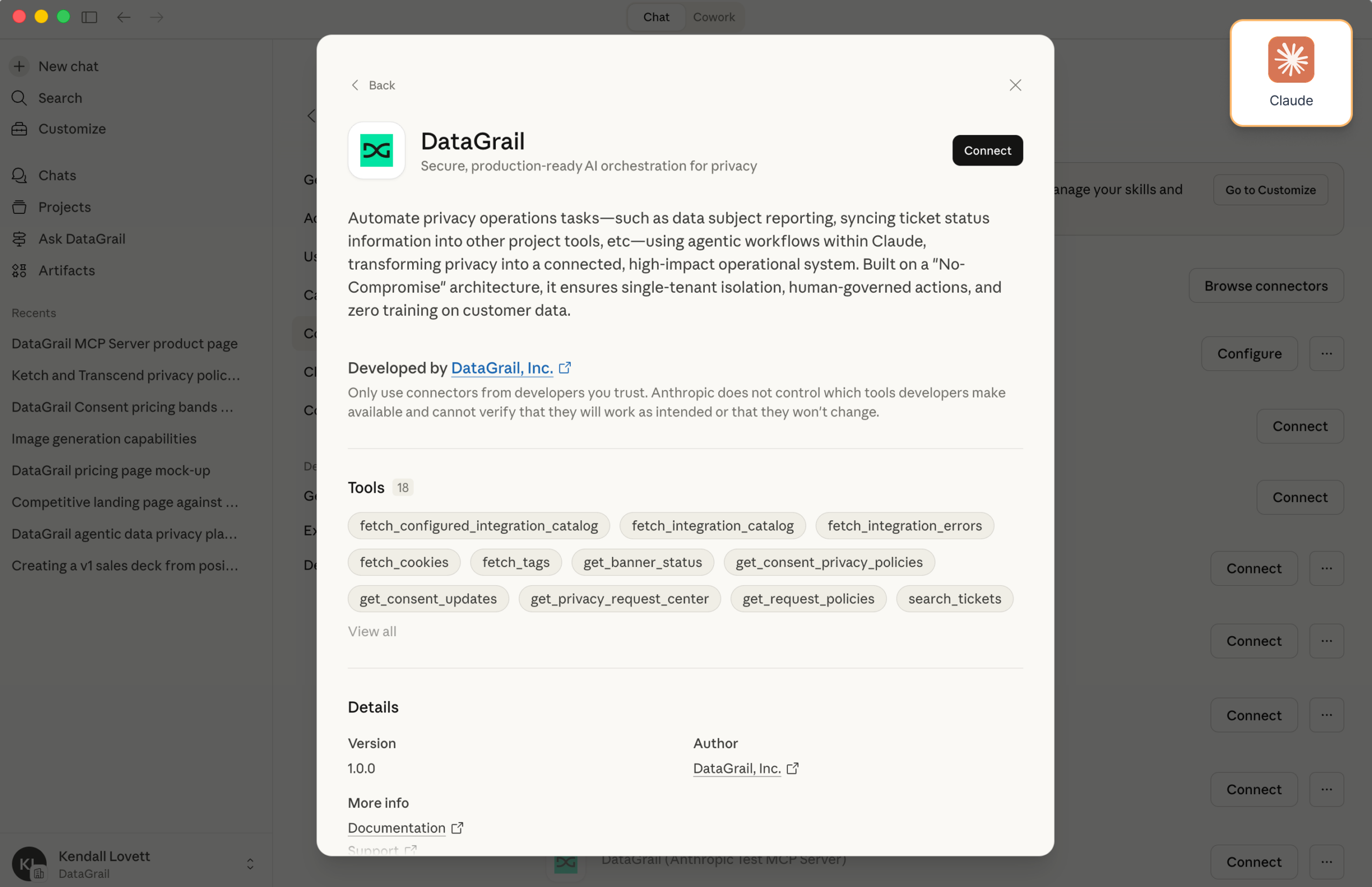
Connect directly from Claude Desktop, OpenAI Codex, or your AI client of choice to securely orchestrate privacy work across all your AI tools.
In addition to the standard security benefits of using MCP, the DataGrail MCP Server is built on DataGrail’s no-compromise security architecture, delivering single-tenant isolation, OAuth 2.0 with PKCE, human-governed permissions and tool access, and full audit logging. Read the docs.
Global Search
Find anything in DataGrail, instantly.
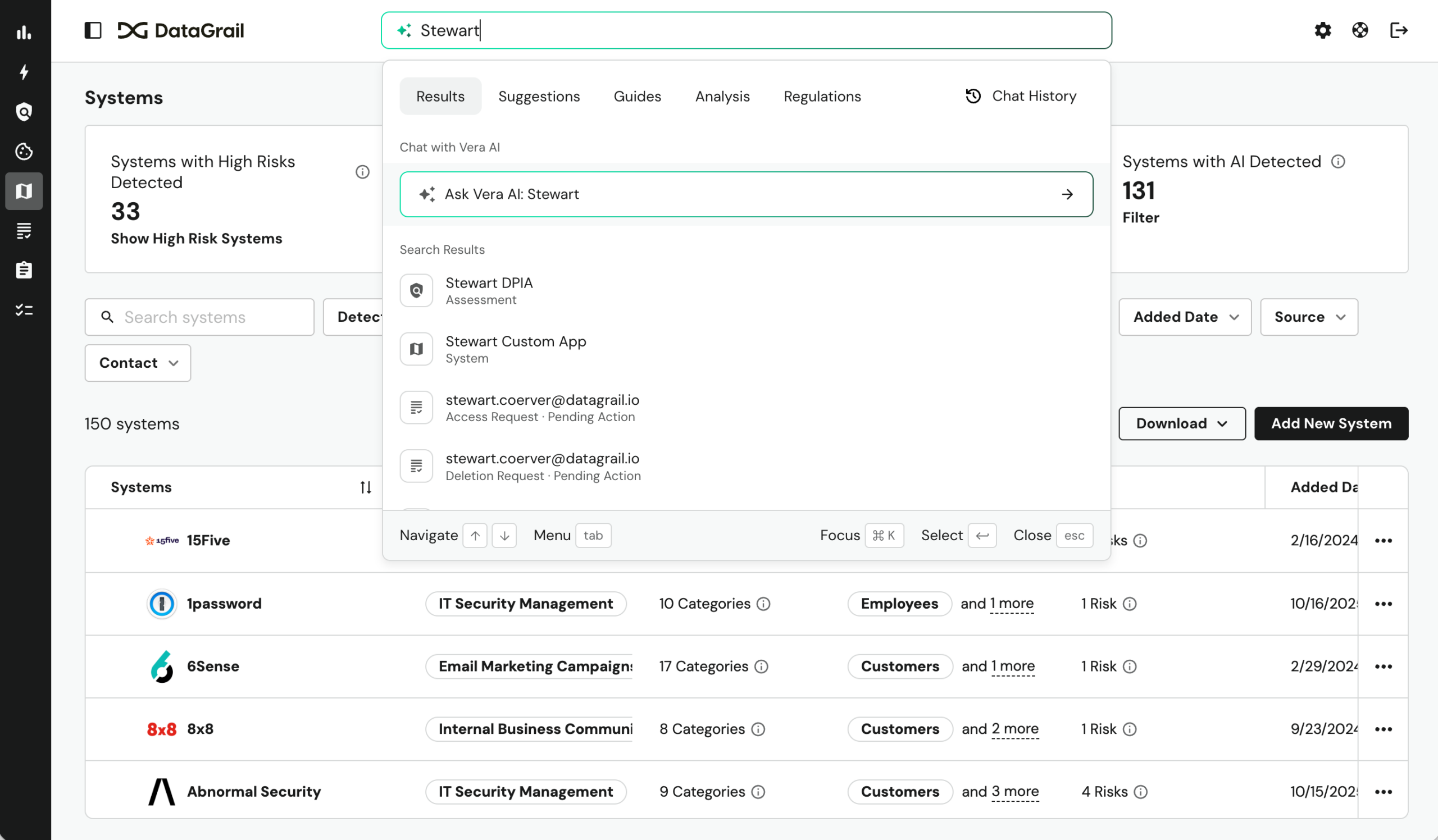
We shipped a brand-new global search experience powered by Vera AI.
- Cross-platform search: One bar to find anything across nine different products. No more navigating to individual pages to locate a record.
- Vera AI guidance built in: For queries of four or more words, Vera automatically begins formulating a response, which you can then pop out into chat and continue the conversation.
Improved Policy Management
We’ve added two new configuration options to Policies, driven by customer feedback.
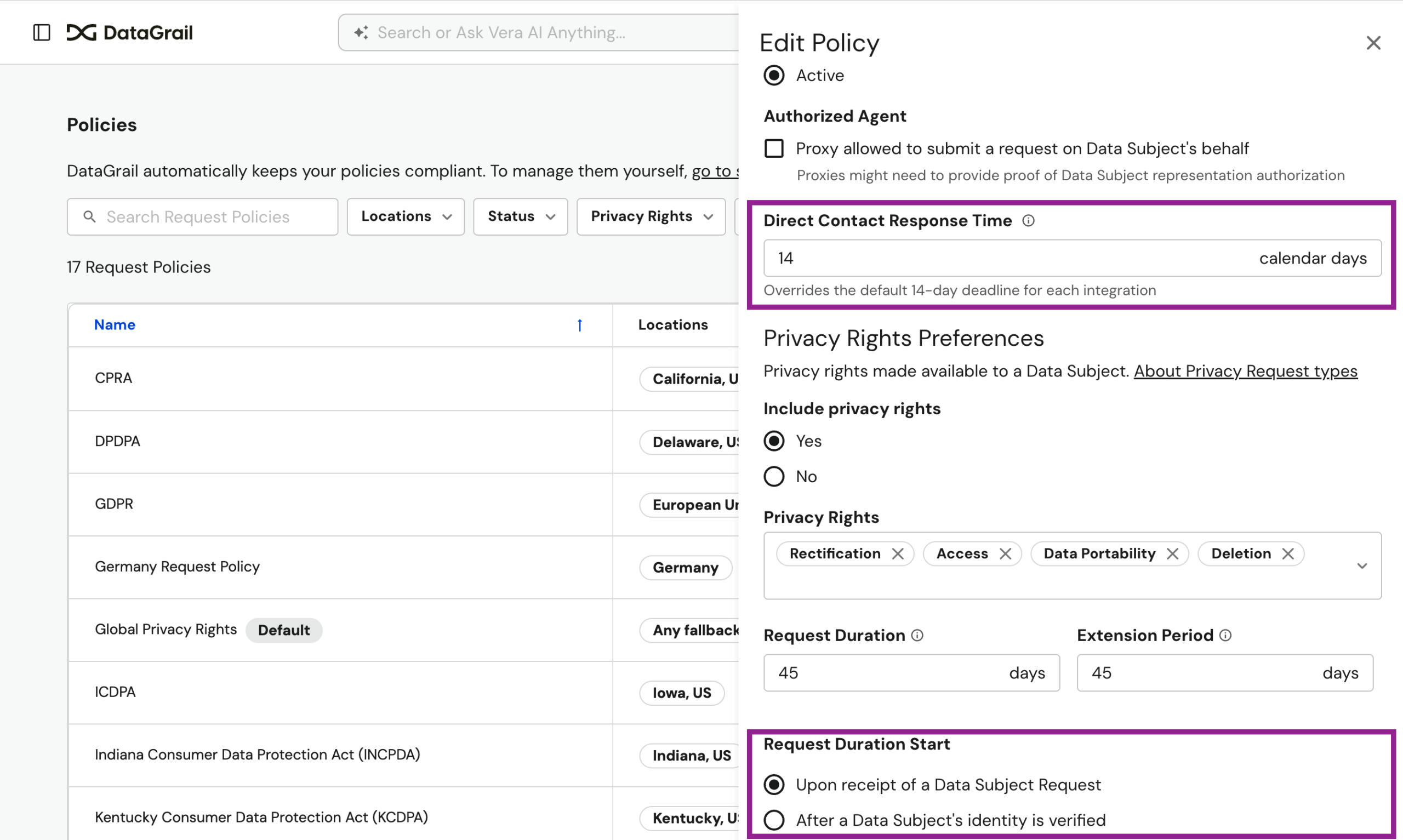
- Direct Contact Response Time (policy-level) — Set a separate response time expectation for Direct Contact processors at the policy level. Useful when policy SLAs are shorter and you want to drive faster processor responses.
- Request Start Time (compliance clock control) — Choose when the compliance SLA clock starts: when the request is submitted, or after identity verification is completed. A clear warning appears when the post-verification option may not be compliant for a given location.
Read the docs.
Delete Risks from Risk Register
You can now delete risks from Risk Register that are no longer relevant.
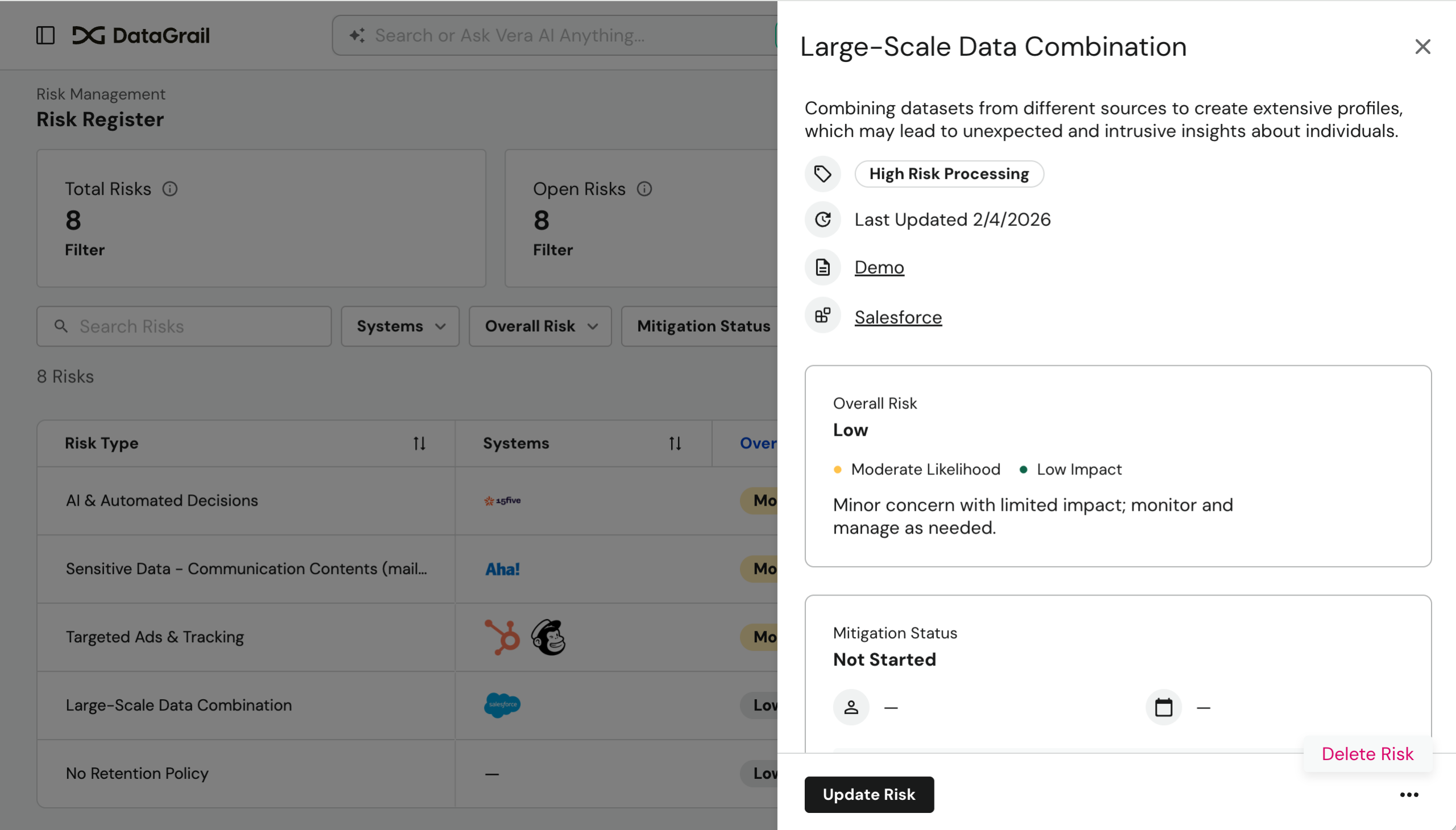
A full audit trail is preserved: when a risk is deleted, all of its history is retained and a final “delete” entry captures the risk’s attributes at the time of deletion.
Download Voicemail Audio at Any Stage of a Request
The ability to download toll-free voicemail audio is now generally available and accessible at any stage of a request, not just during the initial wizard.
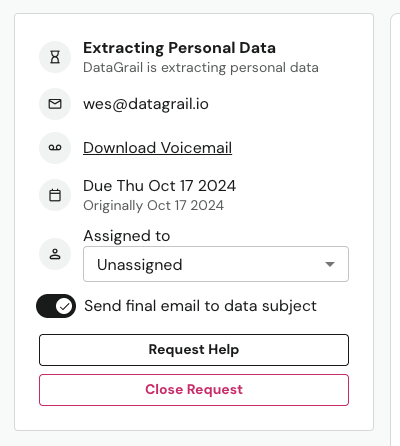
Now, anyone managing the request can access and review the voicemail at any point during handling. Read the docs.
Privacy Inspector Checks Google Consent Mode Config
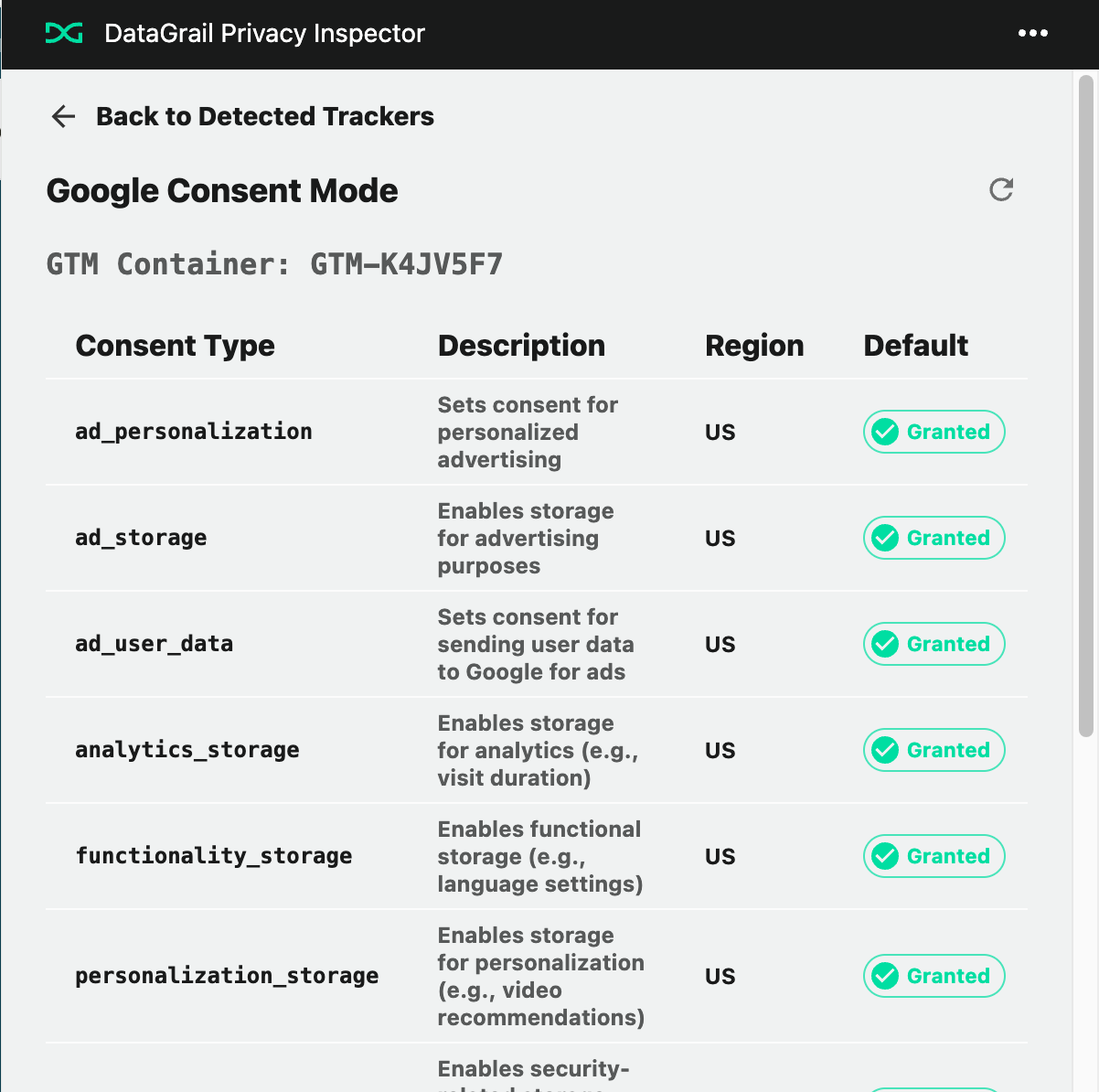
Privacy Inspector, our no-cost Chrome extension, now lets you check the Google Consent mode configuration on any site. Consent mode misconfiguration is a common problem that can impact web analytics and paid ad revenue, in addition to preference management.
Consent Mobile SDKs Now Publicly Available
The DataGrail Consent SDKs for iOS and Android are now available through standard public package registries, making mobile consent integration as simple as any other dependency.
- iOS: Now available as a public CocoaPod. Add it with a single line in your Podfile (pod ‘DataGrailConsent’) — no GitHub tokens or private repository configuration required.
- Android: Now available on Maven Central (io.datagrail:consent:1.0.0). A single Gradle line is all it takes, backed by a full automated CI/CD pipeline for future releases.
Environment-Based Consent.js Logging
Consent.js logging behavior in your browser’s console is now automatically tied to Test Mode status:
- Test Mode ON → Logging Enabled: consent events are logged so you can validate behavior and confirm events are firing correctly.
- Test Mode OFF (live publish) → Logging Disabled: logging is automatically disabled in live environments, aligned with data minimization principles.
New & Updated Integrations
New
- Shopify: System detection added. API Docs
- Cisco Umbrella: System detection added. API Docs
- Salesforce: Opt-out support added. API Docs
Updated
- Shopify: Migrated to the GraphQL Admin API to better align with Shopify’s current API standards. API Docs
- Entrata: Returns more accurate privacy data for access requests by filtering out extraneous fields from the Customers and Leads objects. API Docs
February’s releases sharpen risk prioritization, strengthen consent compliance, and reduce operational friction—setting teams up to start the new year with more clarity and control.
You can always find the latest DataGrail changelog here. We love hearing from you, share your thoughts anytime under Product Feedback in the side navigation.
Until next time. 👋
The DataGrail team